A wardrobe that fits your week.
Begin with your calendar, your favorite clothes, and three combinations you can repeat. Use these visual examples as starting points, then change the colors and shapes to suit you.
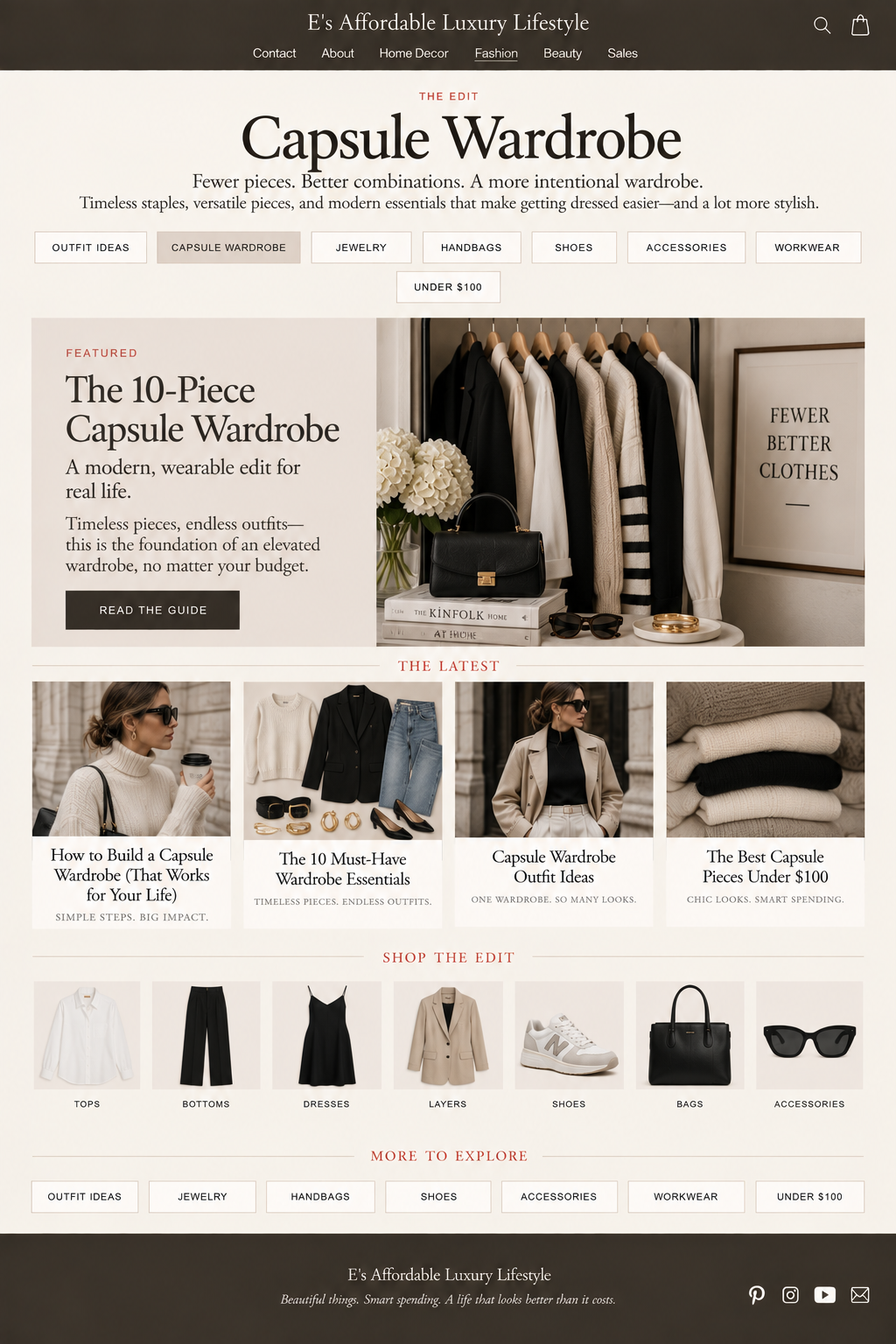
Mostly casual days
Start with a soft knit, your favorite jeans, and walking shoes. A washable tee underneath gives you another option when the weather changes.
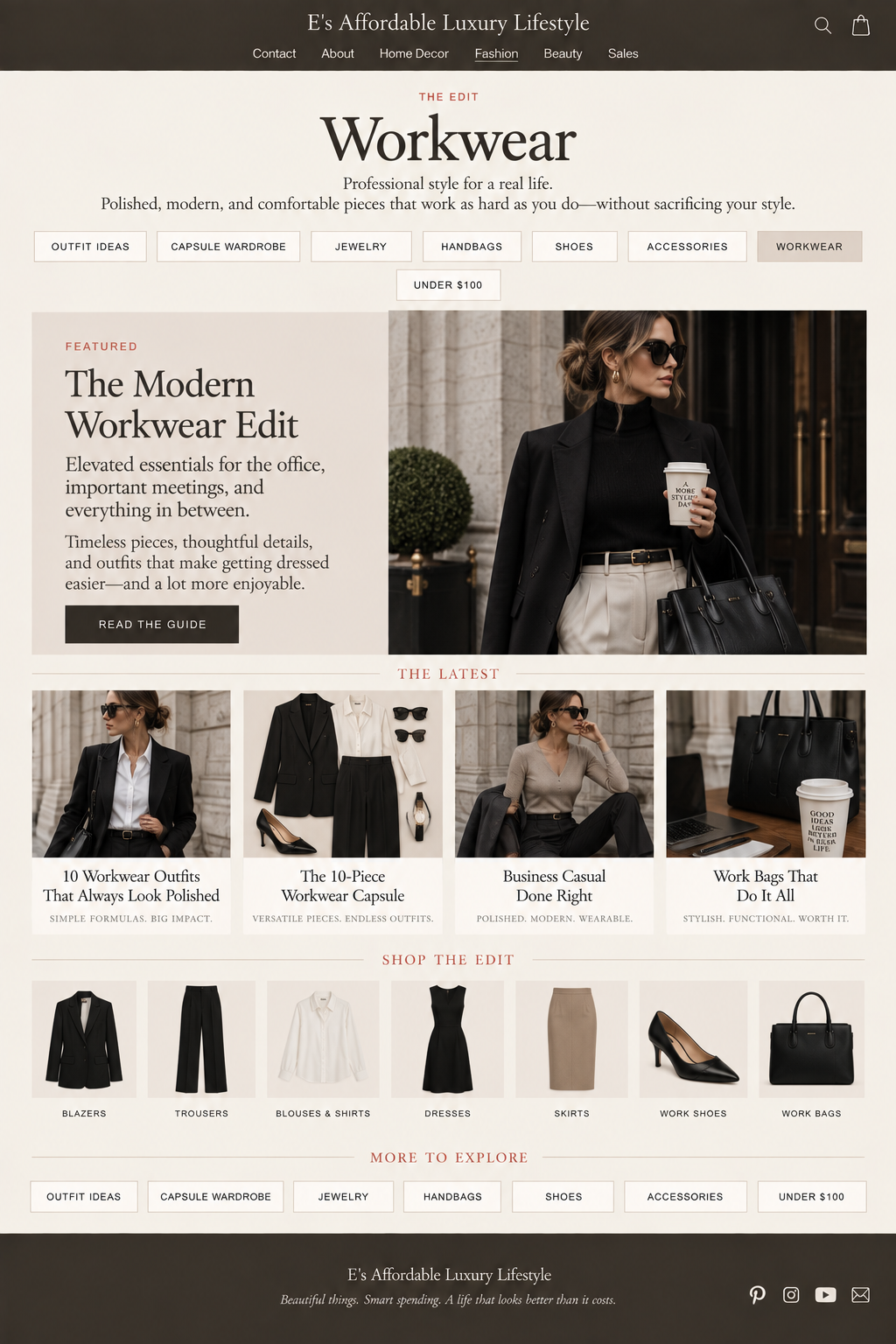
Office days in the mix
Build around trousers, a white shirt, and one blazer. Wear the shirt with jeans on a casual day and the blazer over a simple tee.
Days with changing plans
Choose a removable layer, comfortable trousers, and a simple top. The trench can finish both a weekday outfit and a weekend look.
Try this before you shop
1. Map your week. For three casual days, two office days, and a relaxed weekend, give everyday pieces the most space.
2. Pull your favorites. Start with two bottoms, three tops, and a layer you already wear. This is an outfit test, not a required shopping list.
3. Make three complete looks. Try everything with the shoes and bag you actually use. Sit, walk, and check the fit.
4. Write one precise gap. “Washable dark trousers that work with flats” is more useful than “more basics.”
5. Wear and reassess. Take quick outfit photos for one week. Keep what feels easy, and adjust around your laundry schedule.
Illustrative styling examples from our visual concept.
Fashion / Capsule Wardrobe
THE EDIT · CAPSULE WARDROBE
How to Build a Capsule Wardrobe That Works for Your Life
The useful starting point for a capsule wardrobe is your calendar. Your clothes should support the places you go, the weather you live in, and the amount of laundry you realistically want to do.
Look at a normal week
List your regular activities: work, commuting, school runs, errands, dinner, and time at home. Give the activities that occupy most of your week the most room in your closet. If you work remotely and walk everywhere, comfortable layers may deserve more space than office tailoring.
Start with your most-worn pieces
Pull out the clothes you reach for repeatedly. Notice their shapes, colors, fabrics, and how they feel when you sit or move. Try everything on before sorting. Put pieces needing repairs or alterations in a separate pile with a specific next step; do not count them as ready-to-wear essentials yet.
Build around repeatable outfits
Choose two or three combinations you like, such as relaxed trousers with a fitted top, jeans with a shirt, or a dress with a cardigan. Test different versions using your existing clothes. A repeatable outfit gives a new purchase a clear job and helps you avoid buying isolated pieces.
Plan around laundry and seasons
Ten pieces will not suit every person or schedule. Add enough tops and washable layers to get between laundry days, and keep climate-specific outerwear. Store out-of-season items where you can find them again. You can have a small everyday edit without discarding the rest of your wardrobe.
Keep a considered shopping list
Write the exact gap: dark trousers with pockets that work with flat shoes, for example. Check measurements, fabric, care instructions, and return terms when you shop. Buy one gap-filling piece, wear it, and reassess before adding more.