Small Changes That Make a Living Room Feel Finished
A finished room is rarely about buying an entirely new set of furniture. It comes from scale, repetition, useful lighting, and the layered details that make the room feel welcoming in real life.
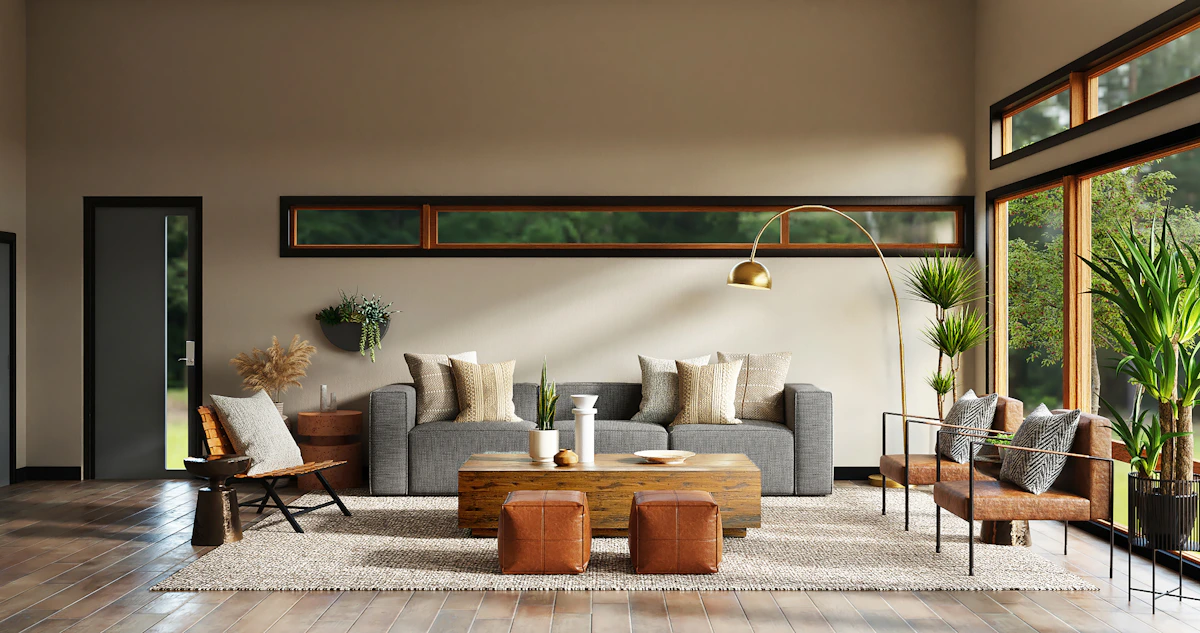

Anchor the seating
Use a rug large enough for at least the front legs of the sofa and chairs. It visually connects separate pieces and makes the conversation area feel intentional.

Add light at eye level
Pair the ceiling light with a floor lamp or table lamp. Softer pools of light give the room depth and make evenings feel more comfortable.

Style one focal surface
Start with the coffee table: one stack of books, one sculptural object, and something organic such as branches or flowers. Leave breathing room.
Repeat a few details across the room
Choose two or three materials or colors and let them appear more than once. A warm wood frame can echo the coffee table. A dark lamp can relate to a black picture frame. Olive or rust in a pillow can reappear quietly in artwork. Repetition helps unrelated finds feel collected rather than random.
Use textiles to soften the furniture
Mix textures before adding more colors. A linen-look curtain, a nubby pillow, a smooth cotton cover, and one knit throw create contrast even within a calm palette. Keep pillow sizes generous and vary the shapes: two larger squares with one lumbar pillow usually look more substantial than a row of tiny cushions.
Two large pillows + one lumbar + one throw
Place the larger pillows at the outside corners, add the lumbar slightly off-center, and drape or fold the throw where someone can actually reach it. The arrangement should look relaxed enough to use.
Check the room from the doorway
Stand where you first enter. The eye needs somewhere to land: artwork above the sofa, a lamp beside a chair, a mirror, or a strong arrangement on a console. If every wall competes, remove something. If the room feels empty, strengthen one focal point instead of scattering more small décor everywhere.
Let useful things be part of the design
A basket can hold blankets. A tray can gather remotes. A side table can support both a lamp and a drink. Beautiful rooms feel better when the decorative choices also solve small daily problems.
Does the rug connect the seating?
Is there a lamp below ceiling level?
Do the fabrics feel varied but related?
Can your favorite objects actually be noticed?
The final edit
Remove anything that does not serve the room, then live with it for a few days. The finishing touch may be a better lamp, a larger piece of art, or simply more open space. A living room feels complete when it supports how you relax, gather, and move through it—not when every surface is full.
Room photography is illustrative.